Wyoming became our nation’s 44th state in 1890, and the northwestern portion of the state remains one of the most wonderous places in America. With the mix of brightly colored hot pots and the deep canyons of Yellowstone, rich history of the Big Horn Mountains, and the jagged, majestic Grand Tetons Mountains, some adventurers even call this expanse “otherworldly”.
Wyoming has so many public lands it can be challenging to navigate. Yellowstone National Park, Bighorn National Forest, and the Bridger Teton National Forest provide some of the most beautiful vistas in the West. The U.S. Congress made Yellowstone America’s first national park in 1872. In the years that followed and with the creation of several more national parks and monuments, environmentalists across the country lobbied for wilderness preservation throughout the American West. 44 years later, President Woodrow Wilson consolidated the management of these parks by establishing the National Park Service. The National Park Service currently manages 84 million acres across all U.S. states, and this has served as a model for countries around the world. American novelist and historian, Wallace Stagner, once said, “National parks are the best idea we ever had. Absolutely American, absolutely democratic, they reflect us at our best rather than our worst.”
Located in north-central Wyoming, the Bighorn Mountains are a sister range of the Rocky Mountains. The Bighorn National Forest is among the oldest of the National Forests. It is named for the Bighorn River, which is contributed to by streams on the west side of the Forest. During the 1800s, the region provided tipi poles, lumber for nearby Fort Phil Kearny, beaver pelts, medicinal plants, and abundant big game. Several hundred beautiful lakes cover the landscape and drain into miles of streams. The Big Horn Basin is home to ancient migrations of wildlife and Native Americans, with historic sites like the Medicine Wheel, Legend Rocks, and Yellowstone Lake.
The Big Horn Medicine Wheel is a sacred site to people of many nations. Although the Wheel was built high above the Bighorn Basin, and the climb up from the basin takes effort, a wide and ancient trail takes adventurers directly to the Wheel. Today The Big Horn National Forest continues to provide recreational opportunities, lumber, summer grazing for cattle and sheep, and clear, cool water.
Yellowstone National Park is the flagship of the National Park Service and a favorite to millions of visitors each year. The park sits on top of a dormant volcano and is home to more geysers and hot springs than any other place on earth. From Yellowstone Grand Canyon to wildlife like America’s largest buffalo herd, grizzly bears, and wolves, it is no wonder adventure seekers flock to this area in search of a taste of the untamed spirit of the West. The ground at Yellowstone National Park appears to be on fire with approximately 50 percent of the world’s hydrothermal features, including Old Faithful, one of the most popular and recognized natural wonders in the United States. Visitors revel in the thousands of miles of trails from day hikes to backcountry expeditions.
Few landscapes in the world are as memorable as the Grand Teton National Park, where you can explore over two hundred miles of trails, float the Snake River, and enjoy the serenity of this remarkable place. The park also has a rich cultural history dating back for millennia. The earliest evidence of humans includes tipi rings, fire pits and stone tools left behind at least 11,000 years ago as glaciers receded. Summertime brought Indian tribes in to harvest berries, fish the clear waters, and hunt abundant wildlife. Indigenous people generally followed migrating animals out of the valley in the harsh winter months in search of milder weather.
Beside an abundance of food, people also came to the Tetons for wealth. Mountain men trekked west in search of desirable beaver fur in the early 1800s. Many trappers, including David Edward (Davey) Jackson, posted up here to capitalize on the land’s bounty. Today we know this area as Jackson Hole. This name came from William Sublette, Jackson’s trapping partner who called it “Davey Jackson’s Hole”. Fashions changed from fur to silk hats and beaver populations declined due to over trapping, so the trapping era faded away to more forward-thinking settlers like John D. Rockefeller. Rockefeller toured the land with Yellowstone’s Superintendent, Horace Albright. Naturally enamored by the mountains’ majestic beauty, Rockefeller bought 35,000 acres with plans to donate the land to the federal government to be part of Grand Teton National Park. In 1950, Congress combined the original park and the Rockefeller lands to establish present-day Grand Teton National Park.
Powell, Wyoming is often considered the basecamp for Yellowstone, The Grand Tetons, and The Big Horn National Forest. Situated in the Big Horn Basin, next to Yellowstone National Park’s East Gate in Park County, Powell is surrounded by public lands in the Greater Yellowstone Ecosystem. The vast amount of public lands and breathtaking scenery attract a wide variety of artisans: artists, photographers, crafters, potters, and blacksmiths. The town was a part of the Shoshone Project, a federal Reclamation Project in 1904 to bring irrigation to the region and expand productive farmland westward; it remains an agriculture town with endless adventure.
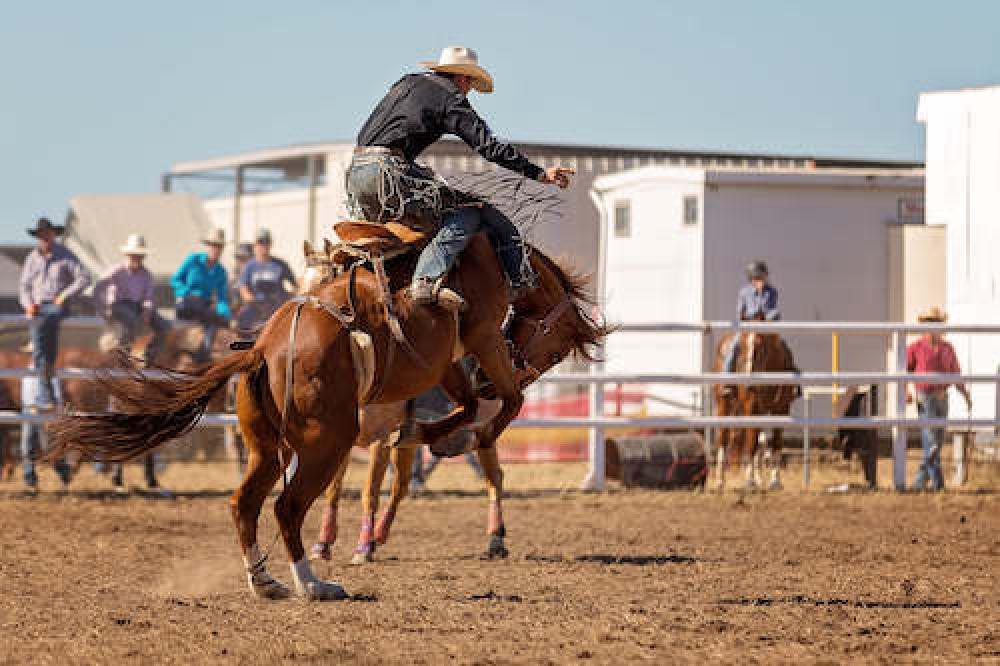
Cody, Wyoming — founded by the famous William F. “Buffalo Bill” Cody — is a quick 25 minutes, southwest of Powell and is one of the last frontiers settled in the lower 48 states. Buffalo Bill was a successful scout for General George Custer before Custer’s Last Stand, where Native Americans defeated US Forces on what is now the Crow Reservation in Southern Montana. Buffalo Bill was not just a knowledgeable guide and soldier; he was a showman. He performed tales of his Wild West adventures on the center stage through his Buffalo Bill’s Wild West shows starting in 1883. He saw the need to preserve a part of what was soon to become civilized, and he recognized the fascination the public had for rodeo events. Since then, Cody has been deemed the “Rodeo Capital of the World” with the Cody Nite Rodeo being the longest running and the only nightly rodeo in the world.
Thanks to the preservation and appreciation for its colorful past, Northwestern Wyoming embraces its history as a vibrant part of the present. It is surrounded by mountains on all sides with four-seasons of epic recreation for all kinds of outdoorsmen. Mountain trails keep hikers, bikers, horsemen, and cross-country skiers coming back for more. Crystal clear rivers and lakes provide blue-ribbon fishing and a world-class playground for paddling, kayaking, and canoeing. Avid hunters, powder skiers and adventurers revel here, so the question is not what is there to do, but rather what equipment are you going to need.